V2X message types
The standardized message set every V2X station speaks — so a car from one maker understands a traffic light from another.
Whatever radio carries them, V2X messages in Europe follow a common set of facilities-layer standards defined by ETSI. Each message type has its own purpose, trigger and update rate. These are exactly the messages V2X2MAP decodes and plots.
CAM — Cooperative Awareness Message
The heartbeat of V2X. Every vehicle broadcasts a CAM periodically (roughly 1–10 times per second, adapting to speed and turn rate) containing its position, heading, speed, acceleration and vehicle type — an "I'm here, going this fast, in this direction" beacon. CAMs let every station build a live map of its neighbours. (ETSI EN 302 637-2.)
DENM — Decentralized Environmental Notification Message
Event-driven warnings. A DENM is triggered by a specific hazard — emergency braking, a stationary vehicle, road works, an accident, slippery road, or adverse weather — and is broadcast to vehicles in the affected area for as long as the hazard persists. Where a CAM says "I exist", a DENM says "something is wrong, here". (ETSI EN 302 637-3.)
SPATEM & MAPEM — the traffic-light pair
SPATEM (Signal Phase And Timing Extended Message) carries the live state of a junction's signals: which groups are red, amber or green, and how many seconds until the next change. MAPEM (MAP Extended Message) describes the geometry of that same intersection — its lanes, approaches and how each connects to a signal group.
The two only become useful together: MAPEM tells a car which lane and signal it is approaching, SPATEM tells it when that signal turns. Combine them with the car's position and you get a green-light countdown and "green wave" speed advice — exactly what V2X2MAP's Android Auto mode computes.
IVIM — In-Vehicle Information Message
IVIM delivers roadside-sign information into the vehicle: dynamic speed limits, lane closures, and other variable message-sign content, so the car can display or act on signage without a camera reading it.
CPM — Collective Perception Message
CPM is the newest and most ambitious. Instead of announcing only itself, a station shares what it detects — objects seen by its own sensors (other cars, pedestrians, obstacles). This lets vehicles and infrastructure pool their perception, so a car can be warned about a pedestrian that only a roadside camera can see. (ETSI TS 103 324.)
At a glance
| Message | Name | Trigger | Answers |
|---|---|---|---|
| CAM | Cooperative Awareness | Periodic | Where is everyone? |
| DENM | Decentralized Env. Notification | Event | What's the hazard? |
| SPATEM | Signal Phase & Timing | Periodic | When does the light change? |
| MAPEM | Intersection geometry (MAP) | Periodic | Which lane / signal is which? |
| IVIM | In-Vehicle Information | As needed | What do the signs say? |
| CPM | Collective Perception | Periodic | What do others detect? |
Message definitions per ETSI EN 302 637-2/-3, TS 103 301 (SPATEM/MAPEM/IVIM) and TS 103 324 (CPM); overview informed by the Vector V2X know-how resource.
Build your own V2X receiver:
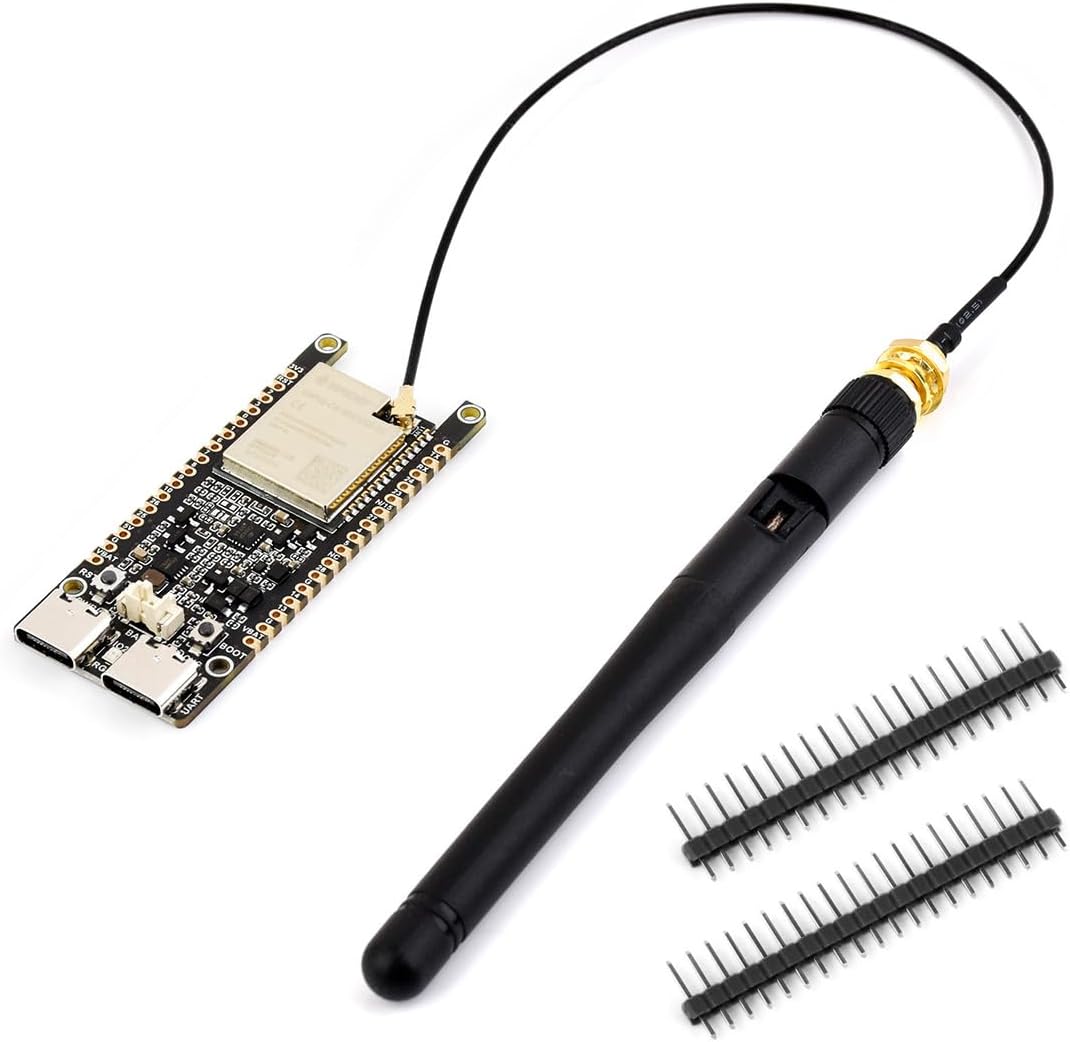
Affiliate link. We may earn a commission on qualifying purchases at no extra cost to you.