What is V2X?
Vehicle-to-everything: the radio language cars and roads use to warn each other before a driver could ever react.
V2X (vehicle-to-everything) is a family of wireless communication standards that let a vehicle exchange information directly with its surroundings — other vehicles, roadside infrastructure, pedestrians and back-end networks. Instead of relying only on what its own cameras and radar can see, a V2X-equipped car receives standardized messages from everything around it, several times per second, with sub-second latency.
The goal is cooperative awareness: a car can "see" around a blind corner, learn about a stalled vehicle beyond the crest of a hill, or get a countdown to the next green light — all before any of it is visible to the driver or the on-board sensors.
The V2X communication types
"X" stands for "everything", and that everything breaks down into distinct communication relationships:
| Type | Meaning | Example |
|---|---|---|
| V2V | Vehicle-to-Vehicle | A car broadcasts its position and speed; the car behind is warned of sudden braking. |
| V2I | Vehicle-to-Infrastructure | A traffic light tells approaching cars its phase and timing (green-light countdown). |
| V2N | Vehicle-to-Network | The car talks to cloud services over the cellular network — traffic, maps, updates. |
| V2P | Vehicle-to-Pedestrian | A smartphone or e-bike signals a vulnerable road user's presence at a junction. |
| V2D | Vehicle-to-Device | The vehicle connects to a personal device — wearables, nomadic units. |
| V2G | Vehicle-to-Grid | An electric vehicle exchanges energy and charging data with the power grid. |
The first two — V2V and V2I — are the safety core of V2X. They run over direct, short-range radio at 5.9 GHz with no cellular network in the loop, so they keep working in a tunnel, in a dead spot, or when thousands of cars crowd one junction.
What V2X is used for
Road safety
Emergency-brake warnings, intersection collision warning, hazard and road-works alerts, emergency-vehicle approach, and warnings about vulnerable road users. These are the applications that justified a dedicated safety band.
Traffic efficiency
Signal phase and timing lets vehicles glide through "green waves", reduce stop-and-go, and cut fuel use and emissions. Infrastructure can also broadcast speed limits and lane information.
Automated and cooperative driving
By sharing intentions and sensor data (collective perception), V2X extends the horizon of automated driving systems far beyond line-of-sight.
How the messages travel
V2X safety messages ride on one of two competing radio technologies — ITS-G5 (based on IEEE 802.11p / Wi-Fi) and C-V2X (based on cellular PC5 sidelink). Both carry the same higher-layer message set defined by ETSI in Europe. The choice of radio is the single biggest fault line in the V2X world: read the ITS-G5 vs C-V2X comparison →
The messages themselves — CAM, DENM, SPATEM, MAPEM and more — are standardized so that any vehicle from any manufacturer can understand any other. See the V2X message types →
Overview informed by ETSI ITS standards and the Vector V2X know-how resource.
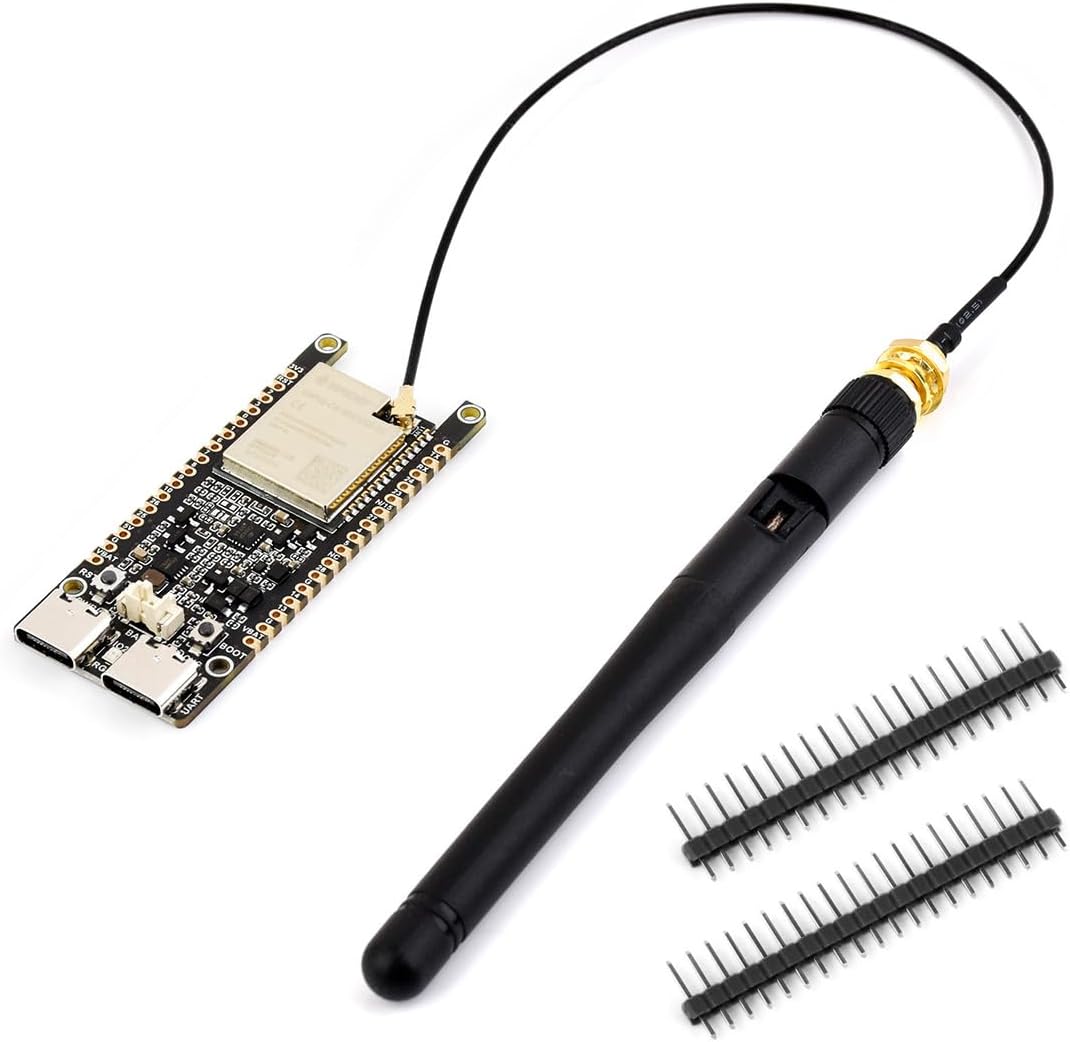
Build your own V2X receiver:
Affiliate link. We may earn a commission on qualifying purchases at no extra cost to you.